B.C. Provincial Election 2026: What Social Workers Need to Know
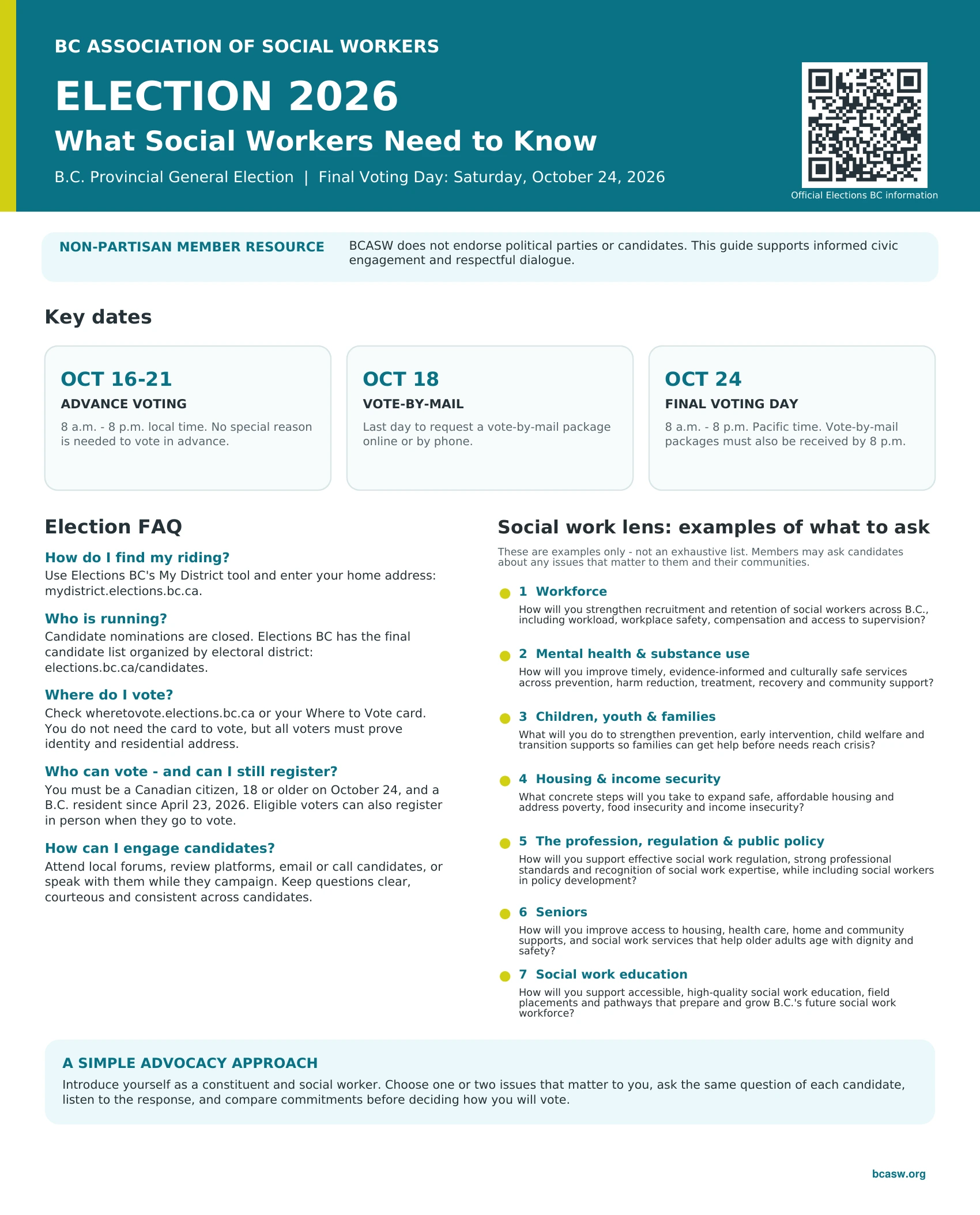
Final Voting Day: Saturday, October 24, 2026
As British Columbians prepare for the 2026 provincial election, social workers have an opportunity to engage with candidates and bring attention to issues affecting the profession and the communities they serve.
The BC Association of Social Workers (BCASW) has prepared a non-partisan election guide to help members navigate voting information, connect with candidates, and consider questions related to social work and public policy.
BCASW does not endorse political parties or candidates. This resource is intended to support informed civic engagement and respectful dialogue.
Key Election Dates
October 16 to 21: Advance Voting
Advance voting is available from 8 a.m. to 8 p.m. local time. No special reason is required to vote in advance.
October 18: Vote-by-Mail Request Deadline
The last day to request a vote-by-mail package online or by phone.
October 24: Final Voting Day
Voting takes place from 8 a.m. to 8 p.m. Pacific time. Completed vote-by-mail packages must also be received by 8 p.m.
What You Need to Know Before Voting
How do I find my electoral district?
Visit Elections BC's My District tool and enter your home address to identify your riding.
Who is running in my riding?
Candidate nominations have closed. You can find the final list of candidates organized by electoral district on the Elections BC Candidates page.
Where can I vote?
Use the Where to Vote tool or refer to your Where to Vote card.
You do not need your voter card to vote, but all voters must provide proof of identity and residential address.
Who is eligible to vote?
To vote in the 2026 B.C. provincial election, you must:
Be a Canadian citizen.
Be 18 years of age or older on October 24, 2026.
Have been a B.C. resident since April 23, 2026.
Eligible voters may also register in person when they go to vote.
Bringing a Social Work Perspective to the Election
Provincial policies shape many of the services, systems, and supports that social workers and the people they serve rely on.
BCASW encourages members to engage with candidates, explore their commitments, and ask questions about issues that matter to their practice and communities.
Here are seven areas to consider when speaking with candidates.
1. Social Work Workforce
How will your government strengthen recruitment and retention of social workers across B.C., including workload, workplace safety, compensation, and access to supervision?
2. Mental Health and Substance Use
How will you improve access to timely, evidence-informed, and culturally safe services across prevention, harm reduction, treatment, recovery, and community support?
3. Children, Youth, and Families
What will you do to strengthen prevention, early intervention, child welfare, and transition supports so families can receive help before needs reach a crisis?
4. Housing and Income Security
What steps will you take to expand access to safe, affordable housing and address poverty, food insecurity, and income insecurity?
5. The Profession, Regulation, and Public Policy
How will you support effective social work regulation, professional standards, and recognition of social work expertise while including social workers in policy development?
6. Seniors
How will you improve access to housing, health care, home and community supports, and social work services that help older adults age with dignity and safety?
7. Social Work Education
How will you support accessible social work education, field placements, and pathways that prepare B.C.'s future social work workforce?
These questions are examples, not an exhaustive list. Members are encouraged to raise other issues that matter to them and their communities.
A Simple Approach to Engaging Candidates
Engaging in the election process does not need to be complicated.
Consider introducing yourself as a constituent and social worker, identifying one or two issues that matter to you, and asking the same questions of each candidate.
Listen to their responses, review their platforms, and compare commitments before deciding how you will vote.
Members can also attend local candidate forums, contact campaigns by email or phone, and participate in respectful conversations about the future of social services in British Columbia.
BCASW is a non-partisan association and does not endorse any political party or candidate.